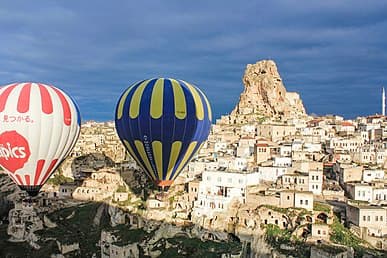


Cappadocia : A Blend of Natural Marvels and Historic Mysteries
Historical Places In Cappadocia

Çavuşin Castle, located in the village of Çavuşin in Cappadocia, is a fascinating historical site carved into a massive rock formation. You can see the remains of this ancient fortress, which was once used as a defensive structure during the Byzantine period. Inside the castle, you can wander through various rooms and passageways carved into the rock. These include ancient living quarters, storage areas, and places of worship. One of the highlights is the nearby Church of St. John the Baptist, a historic church with beautiful frescoes.

Originally known as Mazaca, the city served as the capital of the Kingdom of Cappadocia. Later, it was renamed Caesarea by King Archelaus in honour of Augustus Caesar around 10 BC. When visiting Caesarea Mazaca, you can explore various historical sites that reveal its rich past such as the Kayseri Archaeological Museum and The Citadel of Kayseri (Kayseri Kalesi). You can also see the city's ancient walls and the archaeological remains of its significant buildings while exploring one of the best historical places in Cappadocia.

The city is part of the many underground complexes found in the region, but what makes Nevşehir special is its size and the depth of its history. The city consists of a maze of tunnels, rooms, and passages that were used by ancient people for protection. As you walk through, you will see how these underground spaces were designed to create habitation like kitchens, living areas, and places of worship. You can also see old churches carved into the rock within the underground city.

Tyana, known today as Kemerhisar, was an important ancient city in southern Cappadocia. One of the highlights is the Roman Aqueducts, which are remarkably well-preserved and stretch across the landscape, showcasing the engineering skills of the time. The site also offers a chance to learn about the history of Tyana, which played a vital role during the Roman and Byzantine periods due to its strategic location

These are unique and historically significant areas where ancient people used the region’s natural rock formations for farming and storage. You can walk through the cave spaces and see the various rooms that were used to store different agricultural products. The caves also give insights into the farming practices of the ancient Cappadocians. You can observe the clever ways they adapted their environment for agriculture, which was vital for their survival.

Kültepe, located near Kayseri in Cappadocia, is an ancient archaeological site that dates back to around 2000 BC. It was once the capital of the ancient kingdom of Kanesh and served as a major trade center during the Assyrian period. In one of the famous historical places In Cappadocia, you can explore the ruins of the ancient city, including remnants of homes, temples, and public buildings. Kültepe is famous for the thousands of cuneiform tablets found here.

Like other underground cities in the region, Özkonak was carved out of soft volcanic rock and used by ancient inhabitants as a place of refuge and living quarters. The city has several levels of tunnels and rooms connected by narrow passageways. The city features living quarters, kitchens, storage rooms, and even wine cellars, all intricately carved into the rock. In this one of the top historical places in Cappadocia, You can also see a well-designed ventilation system.

Ortahisar Castle is one of Cappadocia's most iconic landmarks, known for its impressive height and stunning views. This ancient fortress was carved out of a massive rock formation and has been used for centuries as a defensive structure. You can climb to the top of Ortahisar Castle, where you will admire panoramic views of the surrounding valleys. Inside the castle, you can explore various rooms and chambers that were once used for storage, living quarters, and even as a place to keep animals.
Faq
What are the best Historical Places In Cappadocia?
Some of the best historical places in Cappadocia include Göreme Open-Air Museum, known for its rock-cut churches; Derinkuyu and Kaymakli Underground Cities, offering a glimpse into ancient subterranean life. You can also visit Uchisar Castle, the highest point in Cappadocia; and the ancient city of Kültepe, a key archaeological site. These sites showcase Cappadocia's rich history and unique landscapes.
Why is Koramaz Valley so famous?
Koramaz Valley is famous for its stunning natural beauty, historical significance, and rich biodiversity. Located in Cappadocia, this UNESCO World Heritage site is known for its unique rock formations, ancient cave dwellings, and historical churches. The valley also offers excellent hiking opportunities, with picturesque landscapes and a chance to explore the cultural and natural heritage of the region.
What is the best time to visit the Goreme Open Air Museum?
The best time to visit the Göreme Open-Air Museum is during the spring (April to June) and fall (September to October) when the weather is mild, and the crowds are smaller. These periods offer comfortable temperatures for exploring the outdoor sites. During this time, you can enjoy the scenic beauty of Cappadocia without the extreme heat of summer or the cold of winter.
How long does it take to explore Agricultural Cave Spaces?
Exploring these historical places in Cappadocia typically takes about 1 to 2 hours. This allows enough time to walk through the various rooms and storage areas. You can observe the ancient farming techniques and appreciate the ingenuity of the cave's design. The visit length may vary depending on your interest in history and the number of sites you choose to explore.
Why is Stuttgart so famous?
Stuttgart is renowned for its automotive heritage, being home to Porsche and Mercedes-Benz headquarters. The city boasts beautiful green spaces, such as the Stuttgart Botanical Garden and Wilhelma Zoo. It is also known for its cultural attractions, including the Stuttgart State Theater and the Old Castle. Stuttgart’s wine regions and vibrant festivals also add to its appeal.